Factory Body Lines Brought Back Precisely
Dent Repair & Panel Restoration in Toledo for doors, fenders, quarter panels, and hoods damaged by side-swipes, parking impacts, or hail
When a door or fender absorbs impact force, the sheet metal stretches and creases in ways that distort the original body lines and create low spots that become visible under direct sunlight or showroom lighting. Dent repair involves reshaping damaged panels by carefully working the metal back to its factory contour, a process that minimizes the need for replacement parts when the damage hasn't torn through the metal or severely compromised structural integrity. Fred's Auto Service INC restores panels on vehicles throughout Sylvania, addressing everything from shopping cart dings to collision damage that affects multiple body sections.
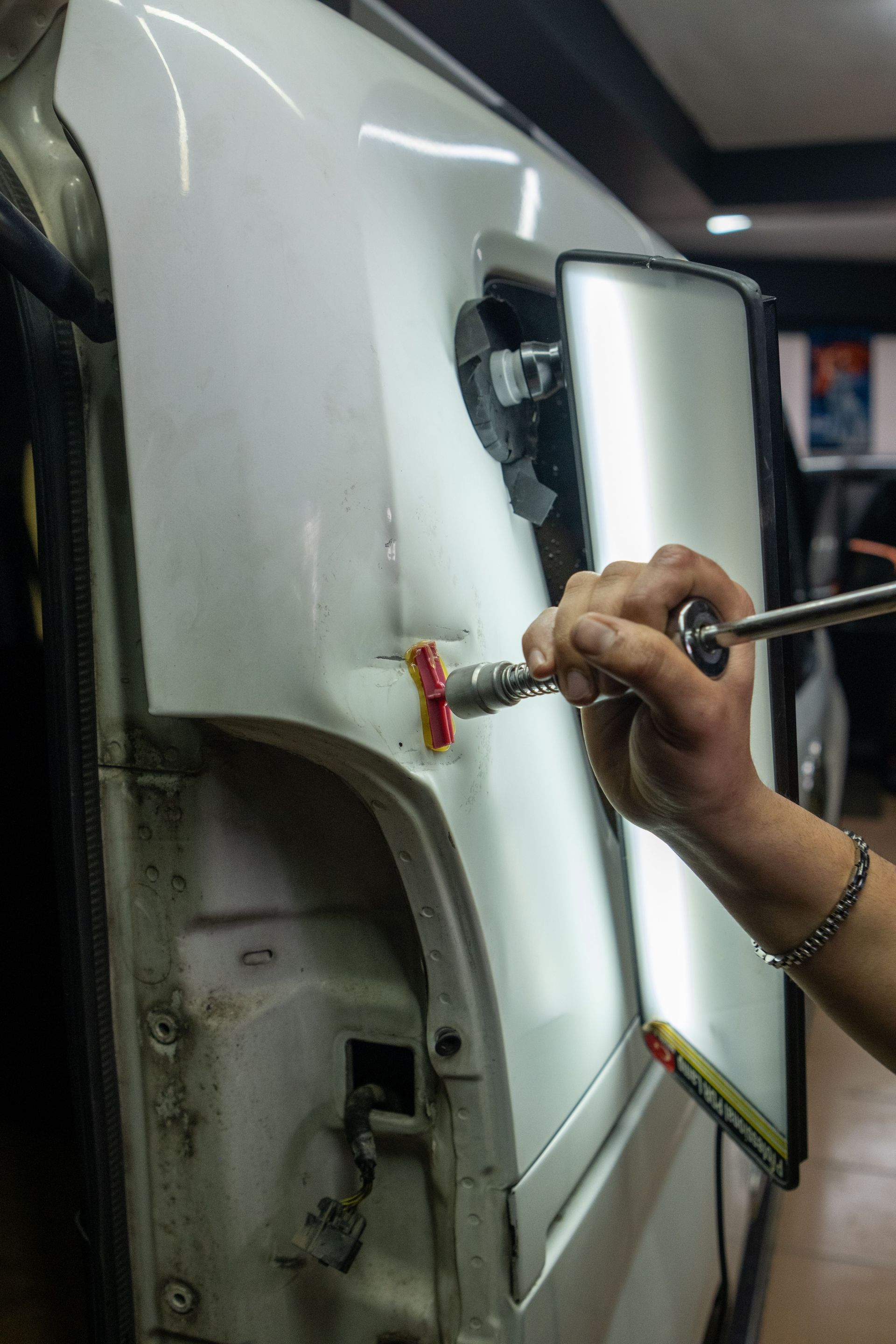
The reshaping process uses specialized tools to massage the metal from behind the panel, gradually reversing the deformation without cracking the paint or creating additional stress points. Some dents require carefully controlled heat application to relieve metal tension, while others need filler material applied in thin layers to achieve a perfectly smooth surface before refinishing begins.
Schedule a dent repair estimate to determine whether your panels qualify for restoration or require replacement.
What Proper Panel Restoration Requires
Restoring factory body lines requires measuring panel contours against the undamaged side of the vehicle to identify exactly where the metal needs to be raised or smoothed, then working the material incrementally to avoid overcorrection that creates new high spots. Each panel is prepped through multiple stages of sanding with progressively finer grits to remove imperfections before primer and paint are applied, ensuring that the repaired surface matches the surrounding finish texture.
Once the panel is reshaped and refinished, reflections move smoothly across the body line without distortion, doors close with factory-spec gaps, and the repaired area matches the surrounding paint under all lighting conditions. The restored panel maintains its original thickness and flexibility rather than relying on heavy filler that can crack over time as the vehicle flexes during normal driving.
Panel restoration preserves the vehicle's original components when damage severity allows, reducing repair costs and maintaining factory welds and corrosion protection. Replacement becomes necessary when metal is torn, severely creased in multiple directions, or located in structural areas where compromised integrity affects crash safety.
What Vehicle Owners Ask About Panel Work
Decisions about repairing versus replacing damaged panels depend on understanding how metal deformation is corrected and when restoration limits are reached.
What types of dents can be reshaped without replacing the entire panel?
Dents that haven't cracked the paint, torn the metal, or created sharp creases in multiple directions can typically be reshaped by working the metal back to its original contour and then refinishing the affected area.
How is damaged metal worked back to factory body lines?
Specialized tools access the back side of the panel to gradually push the metal outward while supporting the surrounding area, reversing the deformation without stretching the metal further or creating new stress points that could crack over time.
Why do some repairs require filler even after the dent is reshaped?
Minor low spots and surface imperfections remain after metalwork is completed, and thin layers of filler are applied to achieve the perfectly smooth surface needed before primer and paint can produce a factory-quality finish.
When does panel damage in Toledo require replacement instead of repair?
Replacement is necessary when metal is torn, when creases are sharp enough to have stretched the metal beyond its elastic limit, or when rust has compromised the panel's structural integrity, particularly common in older vehicles exposed to road salt during Northwest Ohio winters.
What happens during the refinishing stage after panels are reshaped?
Repaired areas are sanded through multiple grits, primed, color-matched, painted in multiple coats, and clear-coated to match the factory finish, then buffed to blend seamlessly with surrounding panels.
Fred's Auto Service INC evaluates every damaged panel to recommend the most effective repair approach, balancing quality restoration with cost considerations. Contact the shop to arrange an inspection and receive a detailed estimate based on your vehicle's specific damage pattern.